Saturday, October 5, 2013

Scientific Consensus Democracy

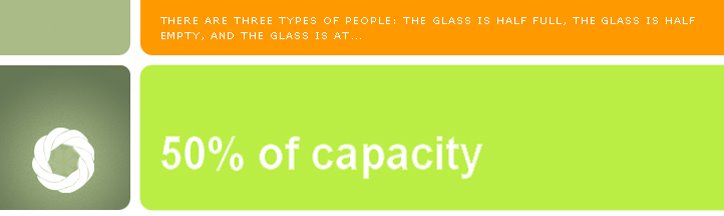
97 out of 100 climate experts agree that humans are responsible for
global warming, so why is the ratio of politicians who do so vastly less?
For rather obvious reasons, the government shutdown has me considering representative democracy. I have previously blogged about better compromise methods to avoid gridlock, but that is a minor modification to the existing paradigm rather than a complete redesign. There are three things a democracy needs to determine as far as policy: what our society's priorities are, what specific policies to pursue to attain those, and who should implement them. To limit the scope of this post, I shall only deal with the first two, leaving the third for further entries. I also will not delve into details too deeply, not only for the sake of brevity but because a single person would be hard pressed to work out every aspect of such an enormous undertaking.

I shall start with the second requirement as it sheds light on the first. More and more frequently there have been distortions of the state of scientific evidence by our political figures. This is unacceptable on questions of fact, which is why I propose a model based on scientific consensus. Citizens can become certified in various policy areas by passing an exam. They could then rate the feasibility of the aspects they are qualified in for the various policy options. This is a key point: they cannot weigh in on parts they are not verified to be knowledgeable about. The experts could cede their evaluation to another qualified individual, but should be able to do so on an issue by issue basis. The best option would be the one officially pursued. As transition costs would be included, revision of the assessments could occur continuously and only if a new policy ranked significantly better than the current one would an actual policy shift occur. Anyone could suggest a policy and as they garner more feasible appraisals, they would rise in prominence, similar to other online peer evaluated systems.

That brief summary raises many issues. Tests would need to be transparent and provided free of charge. Our education system would of course need to be improved, but that is a good notion in any event. To increase inclusiveness, partial accreditation should be possible, with a partial vote being awarded although not necessarily in a strictly linear fashion. This would also be a good way to handle out of date expertise: it would slowly lose influence over time, requiring periodic re-certification. The frequency of such exams is a detail beyond the scope of this post, but would obviously be related to the rate of advances in the field.

The voting system would have to be online for practical reasons, so security would be crucial. Each expert should be provided with a review period to approve any votes they have ceded to others before they lead to policy changes, with automated trend detection systems possibly provided to call attention to outcomes they likely wouldn't agree with. Additionally, measures of uncertainty in ratings could also be incorporated to accurately reflect incomplete information and also to highlight where more research is required.

With that as a policy selection method, the nation's priorities must also be considered. This is where the role of general opinion can legitimately factor in. I envision something more along the lines of a periodic census, rather than issue by issue involvement, where citizens can choose what matters to them. To force people to make trade offs rather than emphasizing everything, they would have a set number of points they must distribute between various competing priorities. These measures would be the things the expert evaluation bottom line would be phrased in terms of, along with an assessment of the existing state of those goals, as a high priority that has already been well satisfied may wind up with less influence than a lower one that is as yet poorly attained. Most likely, automated methods of striking the necessary compromises would be the most efficient way to identify the best set of policy solutions.

In the name of conciseness, I have deliberately omitted details and no doubt failed to consider many more. My larger point is that there are other ways to approach governance in a democratic society; ones that leverage newer technology and the mechanisms of our most successful institutions.

Saturday, March 23, 2013

Skin in the Game

Picking just one quote for this post was not easy!
The post hoc rationalizations accompanying the tenth anniversary of the invasion of Iraq got me thinking about ways to discourage conflict except in the most serious instances. Given the necessary (for classified source reasons) information gulf between our leaders and the general public, any such disincentive must occur at that level. I propose the following: a chance of death. Once the conflict is over, those in our government that voted for war should have to go through a lottery in which they may be picked for execution. The likelihood should be linked to the costs of the war (both human and financial) and perhaps any disparity on that score from what the public was told to anticipate. Obviously, such metrics would need to be very careful considered, and the exact details are beyond the scope of this post, which assumes for the sake of discussion that such a formula is possible. This measure would have a chilling effect on entering into war lightly and discourage optimistic portrayals of the sacrifice being considered. It seems entirely reasonable to expect those asking others to potentially lay down down their lives to risk their own.

Thursday, February 28, 2013

A Ticking Time Bomb is Not Justification

I recently saw new interview clips of Dick Cheney and he once again tried to justify torture with the “ticking time bomb” scenario: when you know a suspect has information that can prevent an imminent, serious threat. The theory is that this possibility is so compelling that we should allow torture to be legally permissible. My view of this line of reasoning is that if the circumstances are so dire, so terrible, that the person charged with extracting the information shouldn't care that torture is outlawed and that they will face legal consequences. If they still have concerns about such matters, then the event they're trying to prevent isn't sufficient justification. We need the illegality to act as a barrier to such behavior, especially since torture's effectiveness is not without doubt and we would increase the likelihood of our captured troops facing similar mistreatment. The argument is to prevent the unthinkable by allowing the unthinkable, and the unthinkable should never be sanctioned by law.

Sunday, January 13, 2013

Well Regulated Militia

Flawed though the test may be, the takeaway is valid.


I have previously blogged about crowd shootings and even touched on the topic of this post, but feel it warrants expansion. While I am choosing for the purposes of brevity to ignore increased regulation of access and storage of firearms and also improving our mental health system, I wish to make it clear that this is not because I discount them. When tackling complex issues, one should consider all the available tools. What I am choosing to focus upon is the frequently mentioned notion that having more armed individuals will somehow reduce deaths from gun violence overall. This concept is usually accepted uncritically by gun advocates and rejected as unrealistic (based on statistics showing a small number of justifiable shootings relative to accidental ones) by proponents of greater gun control; what I wish to consider is what it would take for this to actually be a credible notion.

What seems to be frequently absent from such conversations is proper emphasis on the need for training; just carrying a weapon will not make you a competent combatant. The ability to keep calm and accurately engage an armed opponent, let alone several, is extremely demanding, necessitating a high degree of training. That is true even in a home defense scenario, and if one considers the context of public defense, the difficulty is magnified many times. Your opponent may well have superior firepower (and other equipment) to what you can reasonably have with you all the time and the safety of bystanders is vital. Indeed, there will be some situations where no responsible armed option by a lone individual is possible for fear of injuring others. Gun owners who seriously intend to act in such a capacity need to have training on a par with police and it needs to be ongoing since such skills are perishable. This would be a significant commitment, which would seem at odds with the number of individuals required so that their presence would significantly add response capacity; if they can’t respond appreciably quicker than the police, it makes little difference. So we'd need a large number of highly trained, certified, armed citizens for it to make much of an impact. This sounds very much like the "well regulated militia" the second amendment references (save for the for the fact that they would usually be acting alone) and would represent a great departure from the status quo of often casual gun ownership. One could argue that dedicated security guards might fulfill this role, but that gets away from the idea of armed citizenry and thus is beyond the scope of this post.

It would be easy to interpret my observations as an outright dismissal of the entire prospect, but that is not the case: while all options should be considered, there is no value in unrealistic schemes. The ratio of good actors to bad would have to be very high for it to be a significant net positive, which makes improvements in the other areas I mentioned in my introduction vital for any such possibility, as it takes virtually no training to attack unarmed civilians and accidents do happen. Human lives are not like a Wikipedia article: you cannot simply undo the damage of a malicious few with a well intentioned many (especially if they’re not qualified), and even Wikipedia must impose barriers to access from time to time.

Sunday, December 2, 2012

Ills of the Nuclear Family


The nuclear family is a very recent development and a comparatively isolated model of child rearing. The rise in single parent households, lessened extended family involvement, and increased mobility have compounded this deficiency, leading to some unfortunate consequences. This post examines the shortcomings of the stereotypical nuclear family paradigm, as that is overwhelmingly what is held up as desirable in this country. Note I am not asserting that family structure alone is responsible for the following issues, merely that it is often a contributing factor. Of course in practice there are an almost unlimited number of variations on the nuclear family ideal, but delving into them all would be a massive undertaking. Similarly, I will not attempt to suggest possible remedies, nor explore how existing structures might, and often do, mitigate some of the limitations. Those will be possible subjects for the future.

  • Crowded childbearing window: The best years for bearing children are also critical ones for obtaining an education and beginning a career. The demanding nuclear family system makes balancing these three difficult and has contributed to the drastic increase in maternal age and associated health problems, as well as declining birth rates amongst the better educated. The fact that having a child in your teens is such a huge barrier to success when biologically it is an entirely suitable time frame highlights the current disconnect.
     
  • Identity loss:
    At the moment it can be hard, especially for women, to both have a family and achieve. Many adults are forced to abandon much of their own pursuits and ability to make new social contacts, which can result in feelings of isolation and frustration. Even when their children are grown, the effects are still felt, such as the popularized "empty nest syndrome" and lost opportunities generally. By sharing the burden of child rearing, these issues could be lessened.
     
  • Little diversification of parental failings: Children are exposed a great deal to the flaws of their parents. Greater care redundancy softens the impact of personality disorders, income inequality, and more reliably brings neglect or abuse to light. This is the same principle behind the common practice of diversification when investing, so that a single bad stock won't ruin your portfolio.
     
  • Personality conflicts:
    Our media drives us to expect an almost magical closeness with our progeny. If that fails to materialize, disappointment and parental attempts to foist unreasonable expectations on their children can occur. Significant exposure to a greater number of adults would allow them more opportunity to find those they have things in common with. It would also help diminish the practice of infantilizing young adults.
  • Reduced stability:

    The narrow scope of the modern family unit exaggerates issues surrounding parental rights, divorce (or marriage for that matter), death of a parent, or adoption. A broader base would ensure greater continuity, softening the impacts of these disruptions.
  • Inefficiency:
    The nuclear family often neglects gains that can be made through economies of scale, increasing use of resources and labor. Housing costs, electricity, transportation, child care, cleaning, maintenance, food (both purchasing cost and effort of preparation), and clothing are some areas affected, with young parents being the most impacted. Health care also bears mentioning, as our employer based models currently focus on the nuclear family as their basic unit of coverage. Some of this waste is also impacted by our cultural trend towards sole ownership of items even if they are infrequently used; a practice reinforced by the isolated model the nuclear family ideal espouses.
     
  • Marginalization of the elderly: The mobile nature of individuals today can often result in parents being isolated later in life if their children relocate. A less punishing, more interconnected system would allow more personal development during parenthood as well as providing more opportunities for cross generational bonds (not necessarily just with relatives) to be made. The simultaneous problems of marginalized seniors and a lack of affordable day care are especially telling.

Sunday, November 18, 2012

A Measure of Success

538's estimate of state probabilities.
Came up with a way to measure 538's success in predicting the election other than a simple boolean for each state. All predictions are weighted by their certainty. A 50/50 estimate would thus count for nothing (it's worth pointing out that those calling the election a tossup were doing this...), whereas a prediction of 100% would yield a weight of 1.0. Correct predictions are positive, incorrect negative (538 got all 50 states right, plus DC). This weight is then multiplied by a state's electoral votes, summed, and then normalized on the range of the worst score (100% certainty on all, but getting them all wrong: -538) to the best (100% certainty, all correct: 538). Doing this gives 538 a score of .9485. Note that I treated states that award their electoral votes in a split manner as all or nothing for simplicity.

Baseline estimate of state probabilities
To provide more insight, a naive model was used to provide a baseline: all swing states estimated at 50/50 and all non swing states at 100%. This gives a score of 0.8977. This means that 538's estimate gets us 49.66% of the way from the baseline to a perfect forecast. Unfortunately, the data necessary to apply this measure to other forecasts wasn't easily available (and by "easily", I mean "with the amount of effort I was willing to put into this blog post"), but I grabbed some from a couple other sites.

PEC's last estimate map before the election.
Princeton Election Consortium's last posted data was in the form of a color map, so I extracted their estimates by examining the colors and they were clearly not that precise. Applying my measure, they got a score of 0.9429, and were 44.19% of the way from the baseline to a perfect forecast.

Simon Jackman's swing state estimate data.
Simon Jackman over at The Huffington Post had this estimate of swing states probabilities the day before the election. I couldn't find the non swing state opens, so filled in 100% for them, which almost certainly inflated his overall score. It worked out to 0.9544, and was 55.38% of the way from the baseline to perfect.

If anyone has other data (or better versions of the data I did use) I'd be happy to include it in this post. Here is the spreadsheet I used to compute the scores.

Bonus: I edited these maps that have been making the rounds since the election that scale state size according to electoral votes and population respectively to have purple shading that reflects the percentage of Obama and Romney votes. They don't really warrant a post of their own, especially since I didn't create the original maps they're based on.

Size proportional to electoral votes (1 square = 1 vote)
Size proportional to population (original image didn't include HI or AK)


Wednesday, November 7, 2012

DIY Shingle Lift

The lift is carefully aligned at an angle of that-looks-about-right degrees.

Needed to get 4,200 lbs of shingles onto my friend's roof and the nearest rental place with a power ladder was very far, it was expensive, and we lacked any way to transport it (and an appropriate ladder). For $30 of lumber and hardware I turned my electric hoist and some scrap wood into a lift. It took one hour to design and two to build. This is less time than renting would've taken, given the two separate round trips required.

I used two sixteen foot 2x6s for the rails, and ordered an additional twelve foot piece (for the carriage and key pieces I didn't trust making out of the scrap available), all of which were delivered along with the shingles from the hardware store. When the project is done, they'll be cut in half and saved for future projects. We already had decking screws to assemble it, so all that was needed was a pulley (a 640 lb one is far more than the 75 lb bundles require but it was inexpensive and I can use it for future hoist projects), a u-bolt to affix the cable, and a cable stop.

My hoist can handle 440 lbs in single line mode and goes reasonably fast. I mounted it on the bottom so that the controls would be accessible to the operator on the ground without having to lengthen the control cable, so its weight would be at ground level, and also so the extra cable length and flexibility of the pulley at the top would even out the slight position shifts as the cable is unwound from different spots on the drum. The width of the lift was determined by the need to put the spool in the center and also provide enough room for ventilation. One way to reduce it would've been to mount the hoist sideways. To protect it from rain, a contractor duty garbage bag was placed over it and was weighted down. A hurricane came through before we were done, so the bag was additionally stapled to the frame. It didn't suffer any water damage, despite the need to work the bag around the cable (this junction was taped).

I designed the carriage to go low enough that the shingles could be easily loaded and also so that the bundles go over the top of the lift, sliding off right into your arms. The lift is set at a height above the roof to make this convenient. The platform is a piece of scrap from a demolished deck, which is why it has that odd angle. I made the carriage 1/4" larger than the frame to account for small variations in width. By simply resting a board at the back, the lift can also raise tools or other materials. Large marks drawn in sharpie allow the operator on the ground to know when to stop. Ideally a limit switch would be used, but it wasn't worth it for a device with such a short lifespan. Similarly, furniture gliders were considered but then rejected as the hoist is sufficiently powerful to overcome friction.


Small legs ensure the carriage doesn't collide with the edge of the roof and also increase the contact area versus simply leaning it. It is surprisingly easy to lift and move, should I need to.


The lift worked very well, although we did run up against the hoist's 25% duty cycle rating, especially as the cooling fan is attached to its motor and does not run unless it does. I plan to add a continuously running fan from an old power supply, but not having one on hand, I rigged a vacuum cleaner blowing air to increase its cooling.